
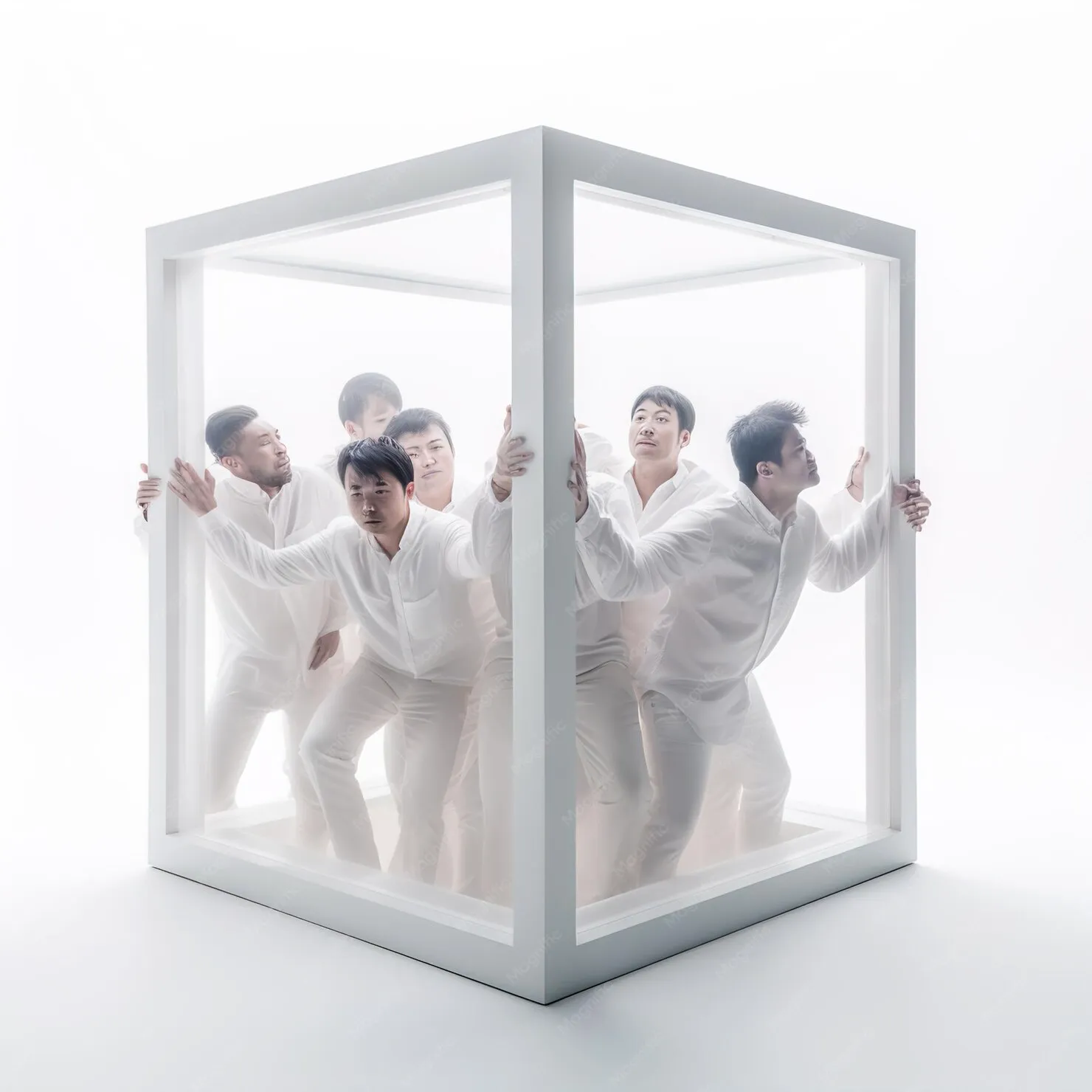
Change of scenery, same ending: why do we unconsciously choose partners who hurt us?
“He’s completely different, not like my exes,” you tell yourself at the beginning of a new relationship. A few months pass, the first crush fades, and suddenly you find yourself at the same point: your partner starts to control you, devalue you, criticize you, or emotionally distance you. The faces, names, and cities change, but the script remains the same.
Why do smart, successful, and mature people keep falling for the same trap over and over again and connecting their lives with those who hurt them?
In psychoanalysis, this phenomenon is called compulsive repetition. And behind it lies an amazing, albeit tragic, mechanism of our subconscious.
The trap of familiar pain
Imagine a girl who grew up with a cold, overly strict father. She was constantly afraid of his anger, tried to be “perfect” and “comfortable” in order to deserve at least a drop of his approval. Her father was her first and main example of a man. A strong connection was formed in her child’s psyche: “Love is when I am controlled. Love is when I am scared. Love must be earned through pain.”
When such a girl grows up, her subconscious searches the world not for someone with whom she will be safe, but for someone with whom she will be familiar.
For our psyche, “familiar” automatically means “safe,” even if it’s a familiar pain. When an adult woman meets a caring, predictable, and calm man, she’s… bored with him. The subconscious has nothing to cling to — there’s no familiar tension there that she learned to survive on since childhood. But as soon as she meets a man who acts distant, criticizes, or flares up in anger, a switch inside her flips: “This is it! These are real feelings!”
Hope to replay the past
The main trap of compulsive repetition is that the subconscious mind goes around this circle for a reason. It has a secret hope.
The psyche seeks to return to the starting point of childhood trauma, to find a similar “toxic” partner, but this time to replay the ending. A girl who was unable to change her father and make him love her, now tries to “cure” and change her boyfriend, who controls or beats her.
She subconsciously thinks, “If I’m good enough now, if I endure and correct him, he’ll change. And then I’ll finally get the love I lacked so much as a child. My wound will heal.”
But this is an illusion. A person falls into a vicious circle: they choose a partner who is a priori incapable of loving well, and try to squeeze this love out of him, destroying themselves more and more each time.
How to break the vicious circle?
Noticing this scenario on your own is a big step, but changing it through “willpower” alone is almost impossible, because the roots lie too deep in the subconscious.
To stop this “Groundhog Day”, you need to do three things:
Acknowledge the scenario. Stop blaming only “fate” or “bad men” and honestly ask yourself: “What childhood story am I trying to replay in this relationship?”
To mourn the past. To accept the fact that you will never replace your parents and will never receive from them the perfect love that you needed when you were 5 or 10 years old. You need to learn to give yourself this deficient love.
Work through wounds in therapy. Psychoanalysis helps you not just understand your scenario in your head, but to “forgive” it on an emotional level. Separate the father figure from the figures of real men around you and, finally, allow yourself to choose safety over the usual pain.
You are not that scared child anymore. You have the right to get out of the trap.